
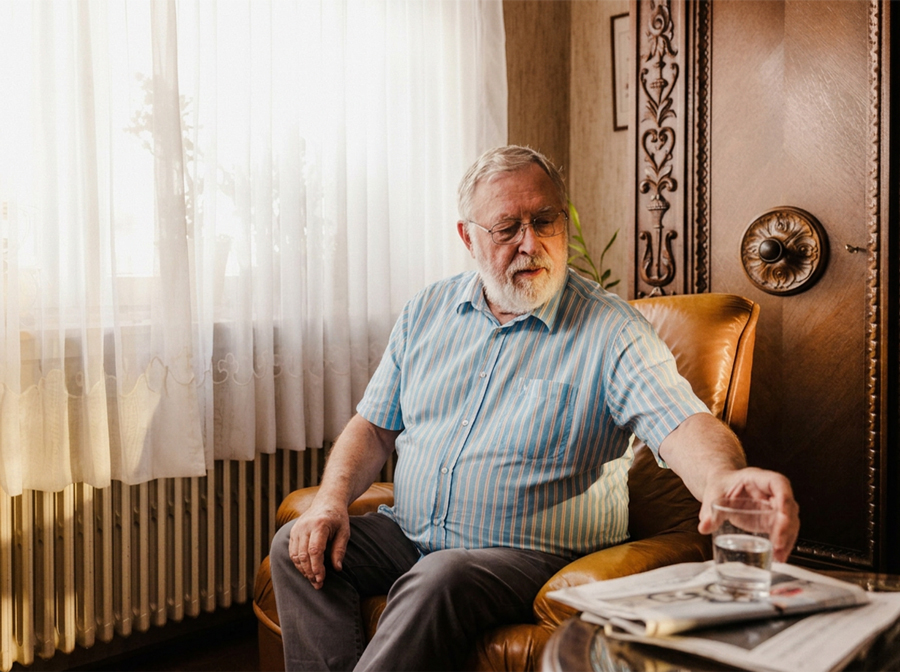
Heat Waves: How Can We Protect Older Adults from Dehydration at Home?
With the arrival of summer and rising temperatures, sunny days are often eagerly anticipated. However, for older adults, heat waves pose a major health risk. The body struggles to regulate its temperature, and the danger of dehydration often creeps up silently.
Preventing Preventing Dehydration in Seniors is a top priority for ensuring safe home care during the summer months. At Verbandskëscht, we work with our patients every day to help them stay ahead of these risks. Learn the best practices to follow and how our teams look after your loved ones.
Why are older adults more vulnerable?
Aging leads to physiological changes that make the body less tolerant of heat:
- Loss of the sensation of thirst: This is the most dangerous factor. An older adult can become severely dehydrated without feeling the urge to drink.
- Less effective sweating: An older adult’s body sweats less, which prevents it from properly lowering its internal temperature.
- Medication use: Certain medications, which are very common among older adults (such as diuretics or blood pressure medications), can exacerbate fluid loss or disrupt thermoregulation.
Preventing Dehydration in Seniors: Life-Saving Habits for Everyday Life
To protect a loved one at home, planning ahead is the best strategy. Here are the essential steps to take:
- Drink before you get thirsty: It’s recommended to drink about 1.5 liters of water a day. To add variety and make staying hydrated easier, offer flavored waters, warm herbal teas, or even broths.
- Adjusting Your Diet: Hydration also starts with what you eat. Choose fruits high in water content (watermelon, cantaloupe, strawberries) and vegetables (cucumbers, tomatoes, zucchini).
- Keep your home cool: Close the shutters and windows as soon as the outside temperature exceeds the inside temperature, and ventilate early in the morning or late at night.
- Refresh the body: Using a thermal water spray, applying a damp washcloth to your face and forearms, or taking lukewarm foot baths are excellent ways to lower your body temperature.
The Verbandskëscht Support Program: Constant Vigilance
Constant supervision is often difficult for families to manage, especially when caregivers are working. This is where Verbandskëscht’s support really makes a difference. We’re by your side every day, helping you enjoy greater peace of mind in your daily life.
Clinical monitoring by our nurses
During their home nursing visits, our certified teams assess the patient’s overall condition. They are trained to identify the early signs of dehydration (dry skin, sudden confusion, unusual fatigue) and to immediately notify the attending physician if they have any concerns.
Support for Meals and Hydration
With our 7-day-a-week in-home care, our caregivers and support professionals assist your loved one with daily activities. We prepare meals, focusing on hydrating options suited to the heat, while encouraging regular fluid intake throughout the day.
Easier Shopping to Prevent Exhaustion
Carrying cases of water is an exhausting and dangerous task during a heat wave. With our Services+ plan, we do the shopping for you, or we go with you to help. This way, your home is always stocked with fresh water and seasonal fruit, without your loved one having to expose themselves to the heat or carry heavy loads.
FAQ: Heat Waves and Home Care
To put your mind at ease, here are the answers to frequently asked questions about prevention of dehydration in seniors and our in-home care services.
My loved one refuses to drink water. What should I do?
This is a common situation. The trick is to get around the problem by offering alternatives. Our teams focus on light syrups, iced herbal teas, cold soups (gazpacho), or fruit compotes. By getting to know the patient’s background, we can identify their specific tastes and suggest drinks they’ll enjoy.
Can you stop by to check on my parent during a heat wave?
Absolutely. Our caregivers provide a genuine, warm, and reassuring presence. We can arrange regular visits (to keep your loved one company and listen to them) to make sure they’re drinking enough, air out the house, and check that everything is okay.
What should you do if you suspect heatstroke?
If your loved one has a high fever, red and dry skin, severe headaches, or is speaking incoherently, this is a medical emergency. You must immediately call for emergency help, move them to a cool place, and moisten their skin while waiting for the doctor to arrive.
Have a peaceful summer, surrounded by loved ones
Don't let the heat threaten the health of your isolated loved ones. Regular, caring visits are the best form of prevention.
Need help with grocery shopping, meal preparation, or just someone to be there for you at home? Contact Verbandskëscht today to arrange assistance tailored to your schedule.